Trauma & Emergency Care Services in Vadodara
When sudden medical crises, high-impact accidents, or severe physical injuries strike, every second counts. Rapid response, accurate initial triage, and immediate surgical stabilization are the critical pillars that dictate patient survival and recovery outcomes.
At Devarsh Multi-Speciality Hospital in Vadodara, our 24×7 Emergency & Advanced Trauma Center provides round-the-clock emergency medical management. Supported by dedicated Level-1 trauma response infrastructure, advanced Cardiac ICUs, ultra-modern modular operation theaters, and on-site diagnostic imaging, our multidisciplinary team of emergency physicians, trauma surgeons, neurosurgeons, and orthopaedic specialists delivers immediate, life-saving interventions.
24×7 Trauma & Emergency Care
Trauma & Emergency Care is a specialized branch of acute medicine dedicated to the rapid evaluation, stabilization, surgical intervention, and intensive resuscitation of patients suffering from sudden, life-threatening illnesses or severe physical injuries.
Unlike routine outpatient consultations, emergency medicine operates under strict international time-sensitive protocols (such as the Golden Hour principle) to prevent organ failure, mitigate systemic shock, and stabilize critical bodily functions:
-
Triage & Primary Survey (ABCDE Protocol): Immediate systematic assessment focusing on Airway maintenance, Breathing restoration, Circulation control, Disability (neurological) evaluation, and Exposure/environmental control.
-
Resuscitation & Hemodynamic Stabilization: Swift administration of intravenous fluids, blood products, endotracheal intubation, and vasopressor support to counteract internal or external hemorrhaging and respiratory distress.
-
Definitive Trauma Surgery: Emergency surgical intervention to repair damaged internal organs, halt internal bleeding, relieve intracranial pressure, or reconstruct complex bone fractures.
Signs of a Life-Threatening Medical Emergency
Medical emergencies can affect any age group and require immediate transport to our emergency center. Recognizing acute red-flag symptoms saves lives.
Immediate transport to Devarsh Multi-Speciality Hospital is required if an individual experiences:
-
Severe, sudden chest pain, pressure, or tightness radiating to the jaw, neck, or left arm (suspected Acute Myocardial Infarction / Heart Attack)
-
Sudden weakness, facial drooping, numbness, or loss of speech (suspected Acute Ischemic or Hemorrhagic Stroke)
-
Severe respiratory distress, gasping for air, or sudden oxygen desaturation
-
Sudden loss of consciousness, unresponsiveness, or unprovoked grand mal seizures
-
Severe, uncontrollable bleeding from open wounds or bodily orifices
-
Severe abdominal pain accompanied by persistent vomiting, cold sweats, or collapse
-
High-fever delirium, acute severe allergic reactions (anaphylaxis), or suspected poisoning/drug overdose
High-Impact Traumatic Injuries Managed 24×7
Our emergency response team handles severe physical trauma resulting from:
-
Road Traffic Accidents (RTAs): High-velocity motor vehicle collisions, two-wheeler crashes, and pedestrian injuries.
-
Polytrauma & Multiple Organ Injury: Simultaneous damage to head, chest, abdomen, and limbs.
-
Traumatic Brain & Spinal Cord Injuries (TBI): Skull fractures, intracranial hematomas, cerebral concussions, and spinal cord compressions.
-
Complex Musculoskeletal Trauma: Open (compound) fractures, joint dislocations, and traumatic limb amputations.
-
Industrial & Worksite Injuries: Severe crush injuries, chemical burns, electrical shocks, and penetrating abdominal/chest wounds.
Emergency Services & Clinical Procedures Offered at Devarsh Hospital
Devarsh Multi-Speciality Hospital is fully equipped with advanced emergency resuscitation bays, dedicated trauma operation theaters, and an integrated ICU setup.
1. 24×7 Advanced Cardiac & Stroke Resuscitation
-
Acute Coronary Syndrome Protocol: Instant ECG acquisition, emergency thrombolytic therapy, and immediate ICU transfer for acute cardiac events.
-
Stroke Code Response: Rapid CT brain imaging to differentiate between ischemic and hemorrhagic stroke within minutes of arrival, enabling early administration of tissue plasminogen activator (tPA) or neurosurgical referral.
2. Emergency Trauma & Damage Control Surgery
Our trauma surgeons, neurosurgeons, and orthopaedic specialists execute immediate operative procedures:
-
Emergency Craniotomy & Decompression: Evacuation of epidural or subdural hematomas to prevent brain herniation following severe head injury.
-
Damage Control Laparotomy & Thoracotomy: Surgical exploration of the abdomen or chest to pack bleeding liver/spleen lacerations or repair vascular tears.
-
Debridement & External Fracture Fixation: Immediate stabilization of compound fractures to prevent systemic sepsis and restore alignment.
-
Reconstructive Plastic & Burn Surgery: Burn wound debridement, skin grafting, and soft-tissue reconstruction for complex wounds.
3. Integrated Emergency Diagnostics & Ambulance Fleet
-
24×7 ACLS Ambulance Support: Fully equipped Advanced Cardiac Life Support (ACLS) mobile units with transport ventilators, defibrillators, and trained paramedics.
-
On-Demand Point-of-Care Imaging: In-house 24×7 CT scans, digital X-rays, FAST (Focused Assessment with Sonography in Trauma) ultrasounds, and rapid pathology blood panels.
Advantages of Our Trauma & Emergency Care Unit
Choosing Devarsh Multi-Speciality Hospital for acute emergency care ensures immediate access to life-saving clinical expertise and infrastructure:
| Emergency Feature | Devarsh Emergency & Trauma Care | Standard Outpatient / Non-Emergency Setup |
| Response Time | Zero Wait-Time protocol for critical Category-1 triage cases | Variable wait times dependent on OPD schedules |
| Specialist Availability | 24×7 on-site emergency doctors, trauma surgeons, and intensivists | Specialists available only on call or during specific clinic hours |
| Diagnostic Speed | Instant bed-side FAST ultrasound, STAT laboratory bloods, and rapid CT scanning | Routine diagnostic scheduling with delayed reporting |
| ICU & OT Readiness | Modular emergency operation theaters and fully equipped ICUs ready 24×7 | Require delayed transfer arrangements to surgical units |
| Multidisciplinary Team | Coordinated care involving neurosurgeons, orthopaedists, and intensivists simultaneously | Single-specialty focus lacking immediate cross-consultation |
Emergency Triage & Treatment Workflow
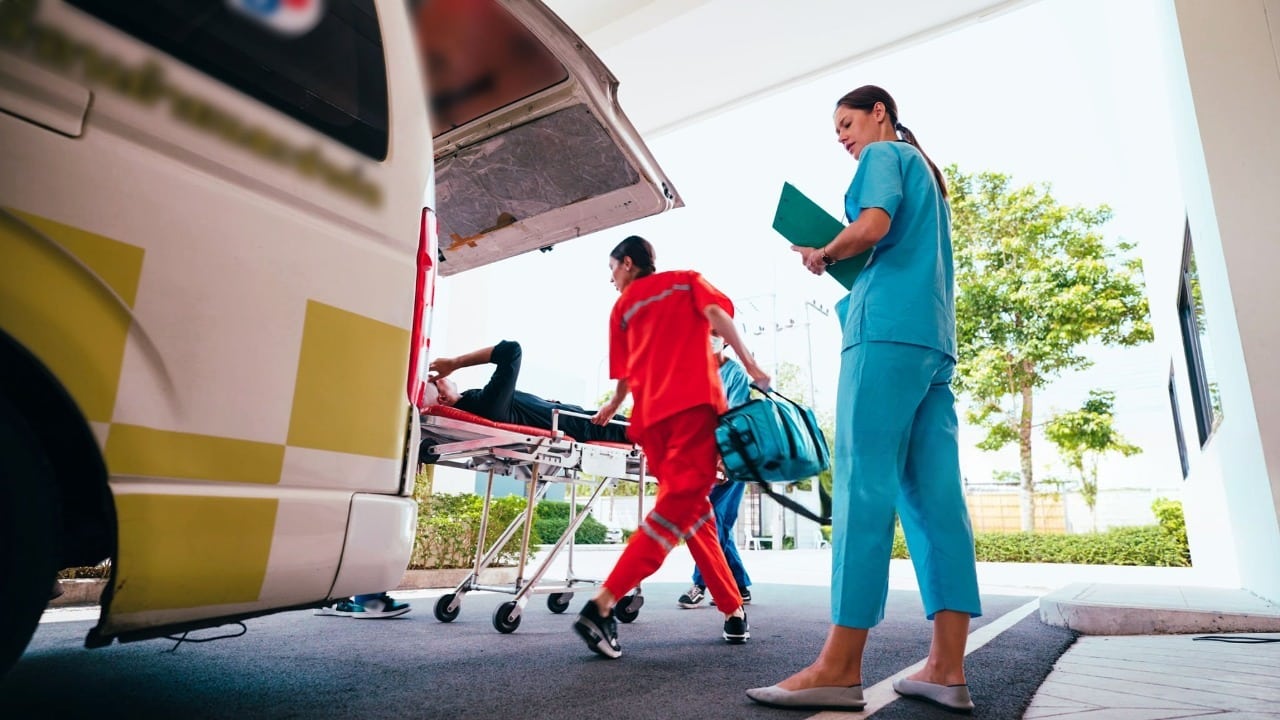
From the moment an ambulance arrives or a walk-in patient enters our emergency bay, a structured protocol is activated.
1. Immediate Triage & Primary Survey (0 to 5 Minutes)
Upon arrival, emergency nurses and physicians evaluate the patient’s vital signs and categorize the severity level based on global triage systems:
-
Level 1 (Resuscitation): Immediate life-threatening conditions (e.g., cardiac arrest, major airway obstruction).
-
Level 2 (Emergent): Severe shock, major head injury, intense chest pain, or severe trauma.
-
Level 3 (Urgent): Stable vitals but severe fractures, moderate pain, or deep lacerations.
2. Secondary Survey & Diagnostic Mapping (5 to 30 Minutes)
Once airway and circulation are secured, a head-to-toe clinical evaluation is conducted alongside rapid diagnostic tests (portable X-ray, FAST scan, blood typing, arterial blood gas analysis).
3. Definitive Intervention & Transfer
Depending on diagnostic results, the patient is shifted directly to our specialized modular operation theaters for damage-control surgery, admitted to the Intensive Care Unit (ICU), or stabilized in the High Dependency Unit (HDU).
Recovery, ICU Rehabilitation & Post-Trauma Care
Emergency treatment extends beyond surgical stabilization; comprehensive post-trauma management ensures maximum functional recovery and psychological healing.
1. Intensive Care Monitoring & System Support
Patients recovering from severe polytrauma, major surgeries, or cardiac events receive continuous monitoring in our ICU. Advanced invasive arterial monitoring, mechanical ventilation, fluid resuscitation, and infection-control practices are maintained around the clock.
2. Early In-Hospital Rehabilitation
As soon as acute vital parameters stabilize, our multidisciplinary team initiates early physical therapy:
-
Chest Physiotherapy: Prevents pulmonary complications and atelectasis in bedridden or post-surgical patients.
-
Early Limb Mobilization: Maintains joint range of motion and prevents deep vein thrombosis (DVT) following orthopaedic surgery.
-
Nutritional Optimization: Enteral or parenteral nutrition protocols tailored by clinical dietitians to accelerate wound and tissue healing.
3. Outpatient Care & Complete Post-Trauma Follow-Up
Following hospital discharge, patients receive structured outpatient follow-up care including wound dressing changes, surgical suture removal, progressive physical therapy schedules, and post-traumatic psychological support.