Advanced Prostate Disease Treatment in Vadodara
Prostate conditions – such as Benign Prostatic Hyperplasia (BPH), prostatitis, and prostate malignancies—are among the most common urological issues affecting aging men. Devarsh Multi-Speciality Hospital provides comprehensive diagnostic evaluation, medical management, and minimally invasive endoscopic urological surgeries to restore healthy urinary function, relieve pain, and improve overall quality of life.
Located in the heart of Vadodara city, our multi-specialty facility delivers compassionate, expert care tailored to the severity and specific type of prostate disease.
What is Prostate Disease?
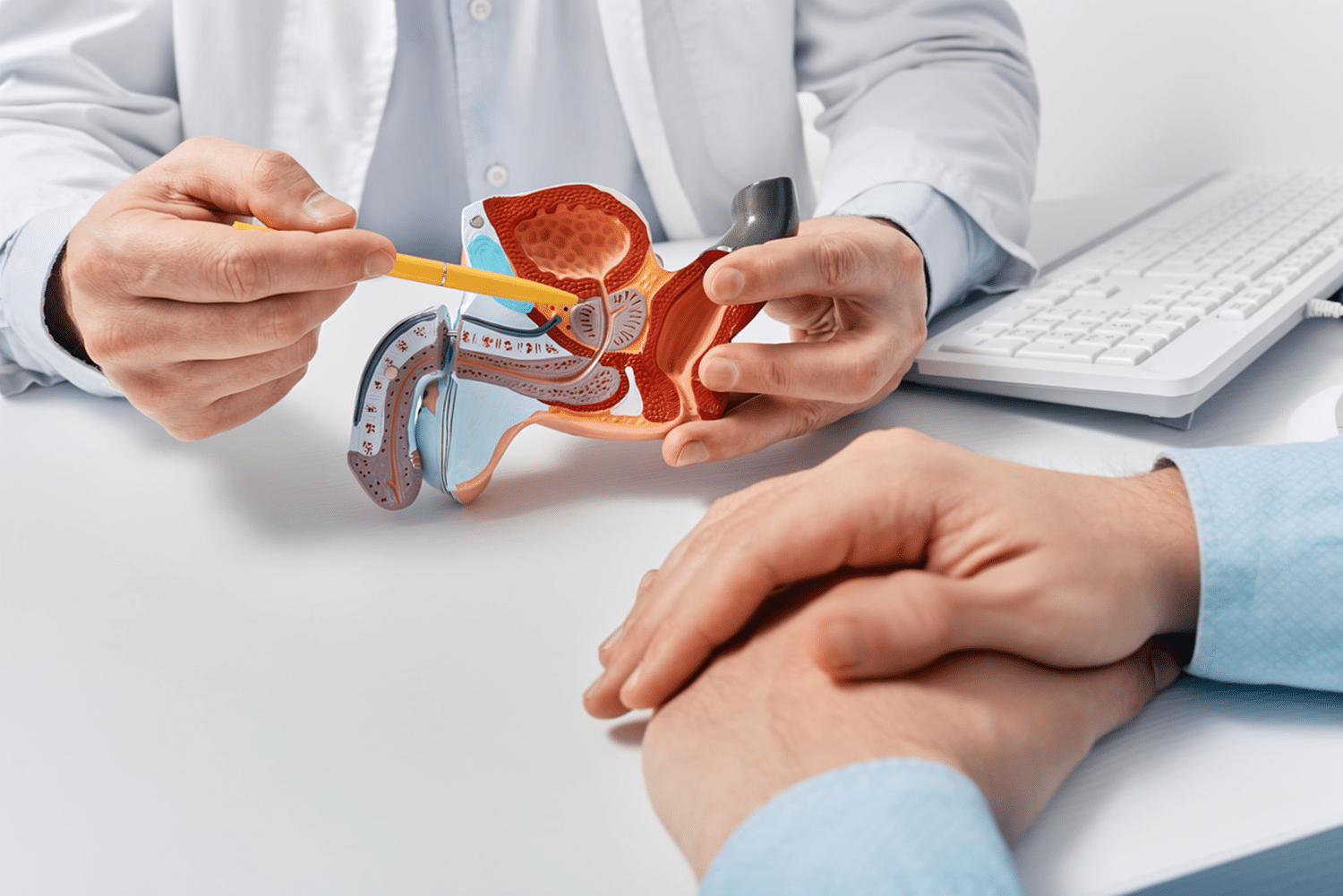
The prostate is a walnut-sized gland located below the bladder in men, surrounding the upper portion of the urethra. Its primary function is to produce fluid that nourishes and transports sperm.
As men age, the prostate gland undergoes structural and metabolic changes that can lead to various conditions:
-
Benign Prostatic Hyperplasia (BPH): Non-cancerous enlargement of the prostate gland that compresses the urethra and obstructs urine flow.
-
Prostatitis: Acute or chronic inflammation or infection of the prostate, leading to local pain and urinary distress.
-
Prostate Cancer: Malignant cell growth within the prostate tissue, requiring early detection and specialized management.
Conditions Treated:
Our urology and surgical team in Vadodara addresses a wide spectrum of prostate and lower urinary tract disorders:
-
Age-Related Prostate Enlargement (BPH): Progressive gland enlargement interfering with normal voiding.
-
Acute Bacterial Prostatitis: Sudden bacterial infection resulting in severe pelvic pain, high fever, and painful voiding.
-
Chronic Pelvic Pain Syndrome / Chronic Prostatitis: Persistent, long-term inflammation causing deep pelvic or perineal discomfort without active bacterial infection.
-
Bladder Outlet Obstruction (BOO): Severe urinary blockage caused by an enlarged prostate pressing against the bladder neck and urethra.
-
Secondary Complications of BPH: Recurrent urinary tract infections (UTIs), bladder stone formation, and urinary retention leading to kidney strain (hydronephrosis).
Common Symptoms of Prostate Disease:
Prostate conditions directly affect lower urinary tract function. Seek medical evaluation if you experience any of the following symptoms:
-
Weak or Interrupted Urine Stream: Hesitancy when starting to urinate, along with a weak or sputtering flow.
-
Frequent Urination (Frequency): Feeling the need to pass urine more often than usual, especially throughout the night (nocturia).
-
Urgent Need to Urinate (Urgency): Sudden, intense urges to void that are difficult to delay.
-
Incomplete Bladder Emptying: A persistent feeling that the bladder is still partially full after finishing urination.
-
Straining to Urinate: Needing to push or strain muscle groups to initiate or maintain urine flow.
-
Pain or Burning During Urination (Dysuria): Discomfort or burning sensations during voiding or ejaculation.
-
Blood in Urine or Semen (Hematuria/Hematospermia): Visibly pink, red, or tea-colored urine resulting from vascular irritation in the prostate.
Our Services Include:
At Devarsh Multi-Speciality Hospital, we offer a complete continuum of care—from early diagnostic screening to advanced keyhole surgical interventions.
1. Advanced Diagnostic Evaluation & Screening
-
Digital Rectal Examination (DRE): A quick physical examination to assess prostate size, consistency, and structural contours.
-
Prostate-Specific Antigen (PSA) Blood Test: Precise blood screening to differentiate between benign enlargement and potential prostatic malignancies.
-
Uroflowmetry: Objective measurement of urinary flow rate and volume to evaluate the degree of urethral obstruction.
-
Ultrasonography (USG KUB & TRUS): High-resolution imaging to estimate exact prostate volume, check post-void residual (PVR) urine volume, and inspect the kidneys and bladder wall.
2. Medical Management
-
For mild-to-moderate BPH or prostatitis, non-surgical drug therapies—such as alpha-blockers (to relax bladder neck and prostate muscles), 5-alpha reductase inhibitors (to shrink gland volume), and targeted antibiotics—provide significant symptom relief without surgery.
3. Minimally Invasive Endoscopic Surgery
-
Transurethral Resection of the Prostate (TURP): The established gold standard endoscopic procedure. Using a specialized scope passed naturally through the urethra—without external incisions—obstructive prostate tissue is precisely trimmed away to open the urinary channel.
-
Transurethral Incision of the Prostate (TUIP): A quick endoscopic option for smaller, enlarged prostate glands requiring minor tissue relief at the bladder neck.
Benefits of Minimally Invasive Endoscopic Care:
Opting for advanced endoscopic treatments like TURP offers distinct clinical benefits:
- No External Incisions: Surgery is performed via the natural urethral pathway, leaving zero external scars.
- Immediate Flow Improvement: Relieves physical compression on the urethra, significantly improving urine flow rates.
- Shorter Hospitalization: Most patients recover smoothly and are discharged within 48 to 72 hours.
- Protects Renal Health: Eliminates urinary retention and backpressure, protecting the kidneys from long-term damage.
- Minimal Discomfort: Conducted under spinal or general anesthesia, minimizing post-operative pain.
Comprehensive Care & Recovery Protocol:
Our medical team supports patients through every stage of diagnosis, treatment, and recovery:
-
Pre-Operative Preparation: Comprehensive cardiac evaluation, blood profiling, urine cultures, and personalized anesthesia planning.
-
Surgical Precision: Procedures are carried out in sterile operating environments utilizing high-definition endoscopic equipment and continuous vital monitoring.
-
In-Hospital Care: Attentive nursing monitoring, catheter management, hydration, and tailored analgesia during the initial recovery phase.
-
Post-Discharge Rehabilitation & Lifestyle Guidance: Direct instruction on pelvic floor conditioning, fluid timing, bladder training, and routine follow-up care to ensure sustained urinary health.