What is a Duodenal Switch Surgery?
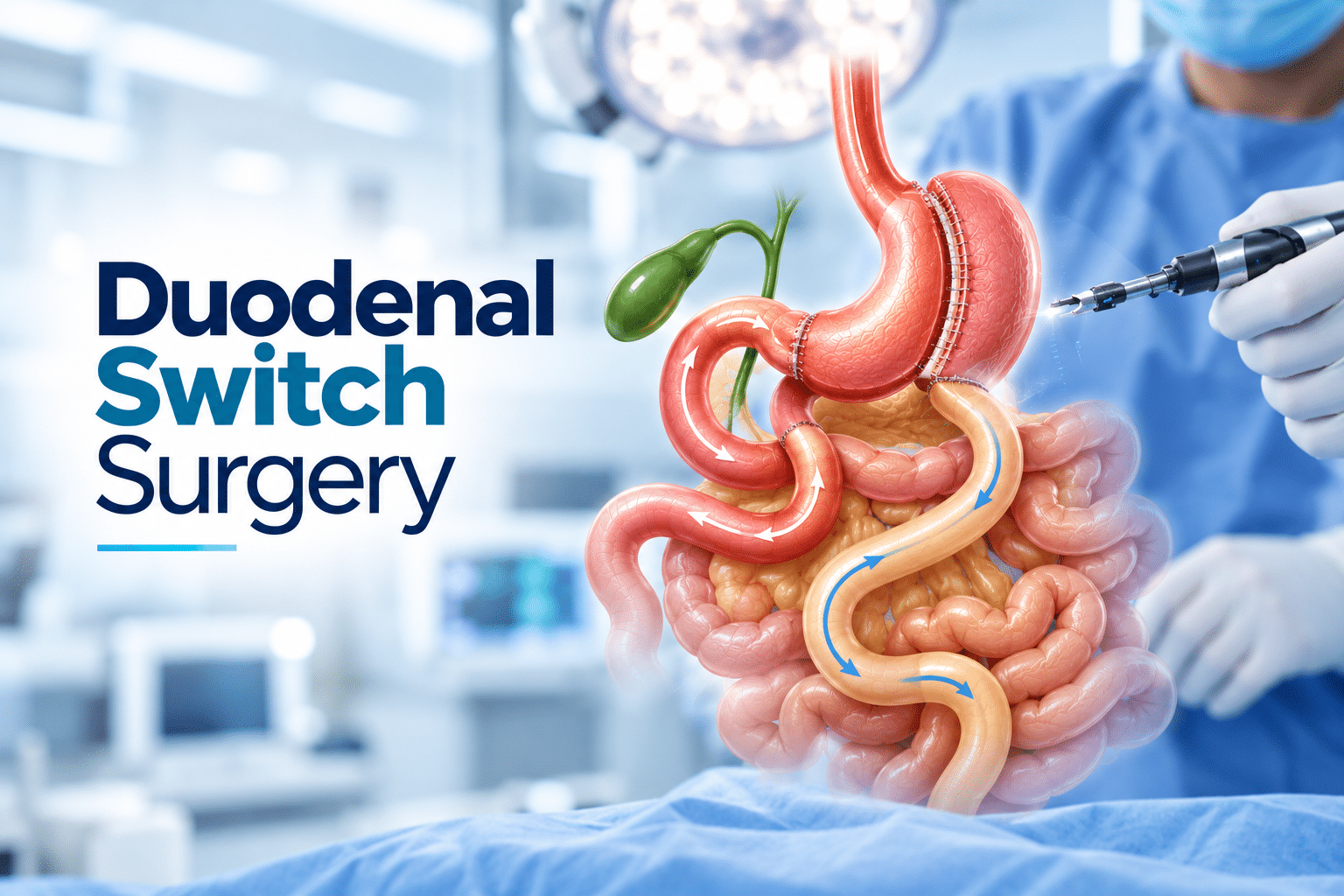
Duodenal Switch surgery – known formally as Biliopancreatic Diversion with Duodenal Switch (BPD-DS) or its modern simplified single-loop variant SADI-S (Single Anastomosis Duodeno-Ileal Bypass with Sleeve) – is the most potent metabolic and bariatric procedure in modern medicine.
The procedure combines two components:
- Sleeve Gastrectomy Component: A vertical sleeve gastrectomy is created, removing ~70% of the stomach to restrict food capacity and decrease ghrelin.
- Duodenal Intestinal Bypass Component: The small intestine is divided near the duodenum (just beyond the pyloric valve), rerouting food flow to bypass a significant section of the mid-intestine. This reduces calorie and fat absorption while driving major secretion of gut satiety hormones (GLP-1).
Who May Benefit from Duodenal Switch Surgery?
Duodenal Switch is indicated for specific, high-complexity cases:
- Super-Obese Patients (BMI > 50 kg/m²): Where standard sleeve or RYGB procedures may not achieve sufficient weight reduction.
- Severe, Medication-Resistant Type 2 Diabetes: Patients requiring high daily doses of insulin.
- Revisional Surgery for Failed Prior Procedures: Patients who experienced significant weight re-gain following a sleeve gastrectomy.
Common Signs & Health Conditions That May Require Duodenal Switch Surgery Consultation
Clinical Profile
- BMI 50 kg/m² (Super Obesity)
- Failed Weight Loss from Sleeve
- Metabolic Syndrome Complications
Severe Metabolic Indicators
- Uncontrolled Insulin-Dependent Type 2 Diabetes
- Extreme Hypertriglyceridemia
- Severe Fatty Liver & Metabolic Dysfunction
Our Duodenal Switch Surgery Procedures Include
- SADI-S (Single Anastomosis Duodeno-Ileal Bypass with Sleeve): The modern, streamlined standard with one duodenal-intestinal join.
- Classic BPD-DS: Traditional dual-loop biliopancreatic diversion for complex clinical cases.
- Robotic Duodenal Switch: Utilizing robotic arms for micro-precision during duodenal dissection and intestinal stapling.
Benefits of Duodenal Switch Surgery
- Highest Average Weight Loss: Patients lose 80% to 90% of excess body weight.
- Highest Type 2 Diabetes Remission: Over 95% of patients achieve complete diabetes remission.
- Preserved Pyloric Valve: Prevents dumping syndrome and allows normal stomach emptying mechanics.
- Larger Meal Satisfaction: Allows slightly larger food portions compared to traditional RYGB while maintaining weight loss via intestinal malabsorption.
Duodenal Switch Surgery Preparation & Evaluation
- Nutritional Assessment: Comprehensive baseline protein, iron, fat-soluble vitamin (A, D, E, K), and calcium profiling.
- Cardiopulmonary Workup: Extensive cardiac stress testing and sleep apnea evaluations.
- Patient Commitment Agreement: Ensuring lifetime adherence to high-protein intake and supplementation protocols.
Duodenal Switch Surgery Recovery & Aftercare
- Hospital Stay: 48 to 72 hours.
- High-Protein Diet Protocol: Minimum 80 to 100 grams of protein daily to preserve lean muscle tissue.
- Lifelong Supplementation: Specialized high-potency bariatric multivitamins, fat-soluble vitamins (A, D, E, K), calcium, and iron with lifelong clinical lab follow-ups.